Your ERP went live, but the warehouse was still working around it
Quick answer
A real warehouse reporting example where skipped barcode scanning left picks open in Infor, causing duplicate deliveries and six-figure risk.
If warehouse users skip ERP process steps after go-live, the system stops reflecting physical reality. In one Infor example, skipped pallet scans left picks open, managers sent the same parts again, and duplicate deliveries followed.
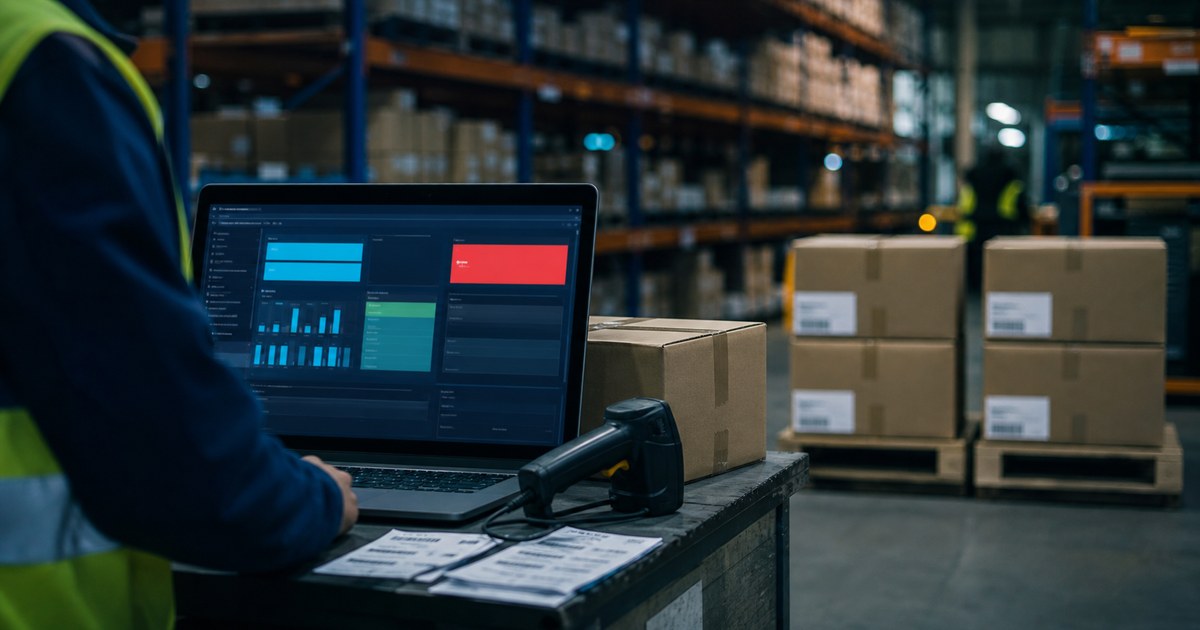
The ERP was live. The warehouse process existed. Users had handheld barcode scanners. The problem was simpler and more dangerous: some people skipped the scanning step because it felt easier.
The goods physically left site, but Infor still showed the pick as open. Managers saw open picks, assumed the work had not been done, and got the same parts picked and sent again.
The issue was discovered after a customer reported a duplicate delivery. Some customers returned the goods. Others did not. The stock loss, delivery cost and SLA impact added up quickly.
The ERP became a version of reality nobody could trust
When warehouse transactions are skipped, the ERP stops being a reliable picture of the operation. It says something is still waiting to be picked even though it has left site.
That breaks more than one process. KPIs are wrong. SLA reporting is wrong. Stock is wrong. Customer service is wrong. Management action is wrong.
If people can bypass the process, the ERP becomes a work of fiction.
The control report that made the problem visible
The fix was not a prettier dashboard. It was a practical Power BI control report showing how long items had sat in a picking location.
Anything over 24 hours had to be investigated. If the item had actually been picked and sent, the team could catch the false-open pick before the same goods were sent again. If it had not been picked, the team could act before the SLA failed.
The report exposed problem parts, problem users, discipline issues and process gaps. It reduced duplicate deliveries, improved KPI response times and created six-figure savings potential in stock, courier and waste reduction.
The takeaway
Post go-live reporting is not only for senior dashboards. Sometimes the most valuable report is a control report that shows where physical reality and ERP reality have drifted apart.
If users are finding workarounds, reporting should make those workarounds visible quickly enough for managers to act.
ERP live, but warehouse data is not trusted?
Digital Adaption helps manufacturers build post go-live reporting controls that expose process drift before it turns into customer impact.
View reporting rescueMatty Hatton is the founder of Digital Adaption, an ERP and data consultancy based on the Wirral. He has spent 15 years delivering ERP transformations for manufacturers, including leading the data migration on a GBP 4.5m consolidation of four legacy systems onto a single Infor LN cloud instance for a 220-user group. He holds an MSc in Digital Transformation and IT Strategy from Manchester Metropolitan University and is Microsoft PL-200 certified.
Start with a 30-minute data risk call